
Tidepool discoveries…
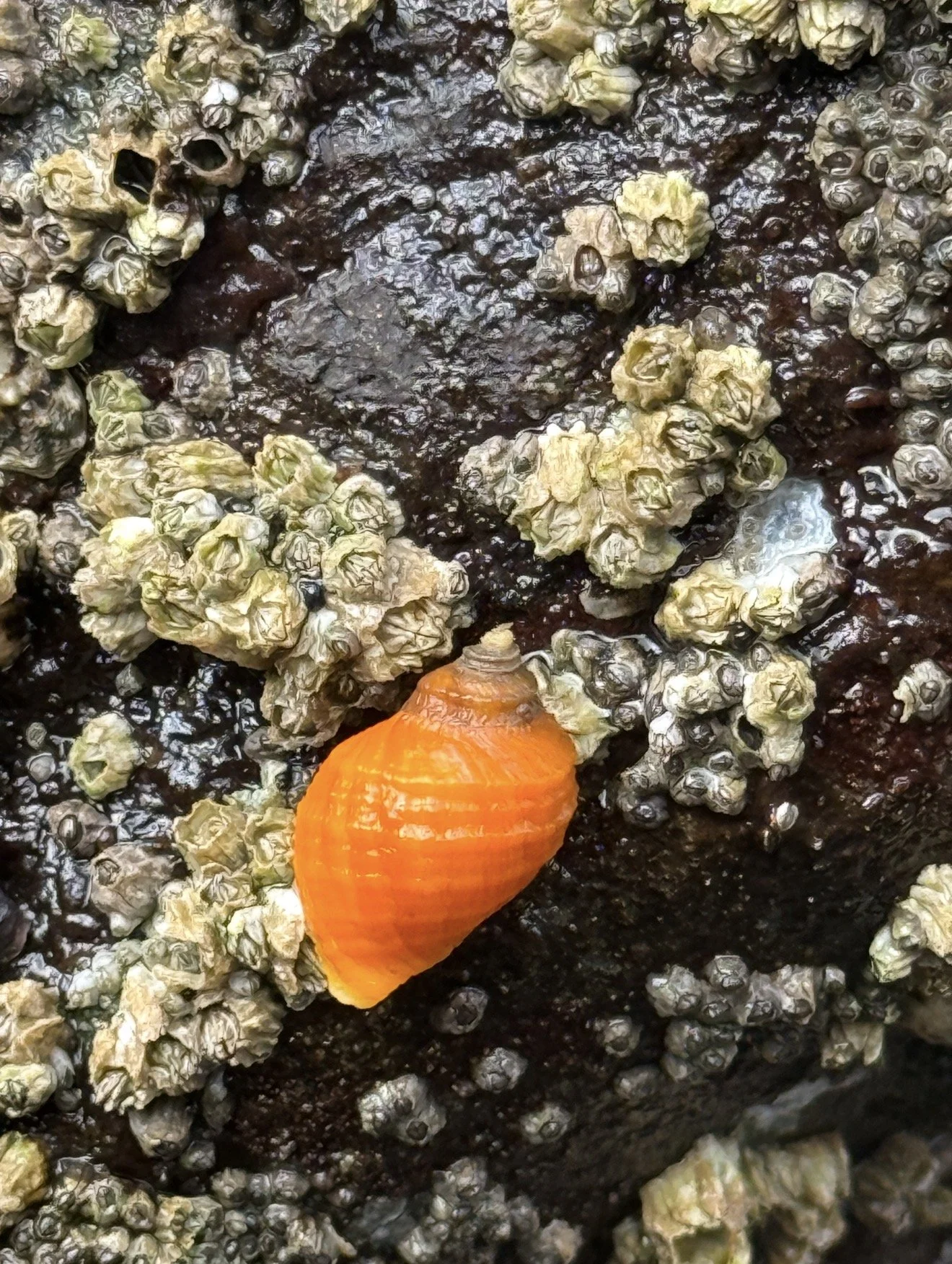
It is a fabulous place: when the tide is in, a wave-churned basin, creamy with foam, whipped by the combers that roll in from the whistling buoy on the reef. But when the tide goes out the little water world becomes quiet and lovely. The sea is very clear and the bottom becomes fantastic with hurrying, fighting, feeding, breeding animals. Crabs rush from frond to frond of the waving algae. Starfish squat over mussels and limpets, attach their million little suckers and then slowly lift with incredible power until the prey is broken from the rock. And then the starfish stomach comes out and envelops its food. Orange and speckled and fluted nudibranchs slide gracefully over the rocks, their skirts waving like the dresses of Spanish dancers.
John Steinbeck
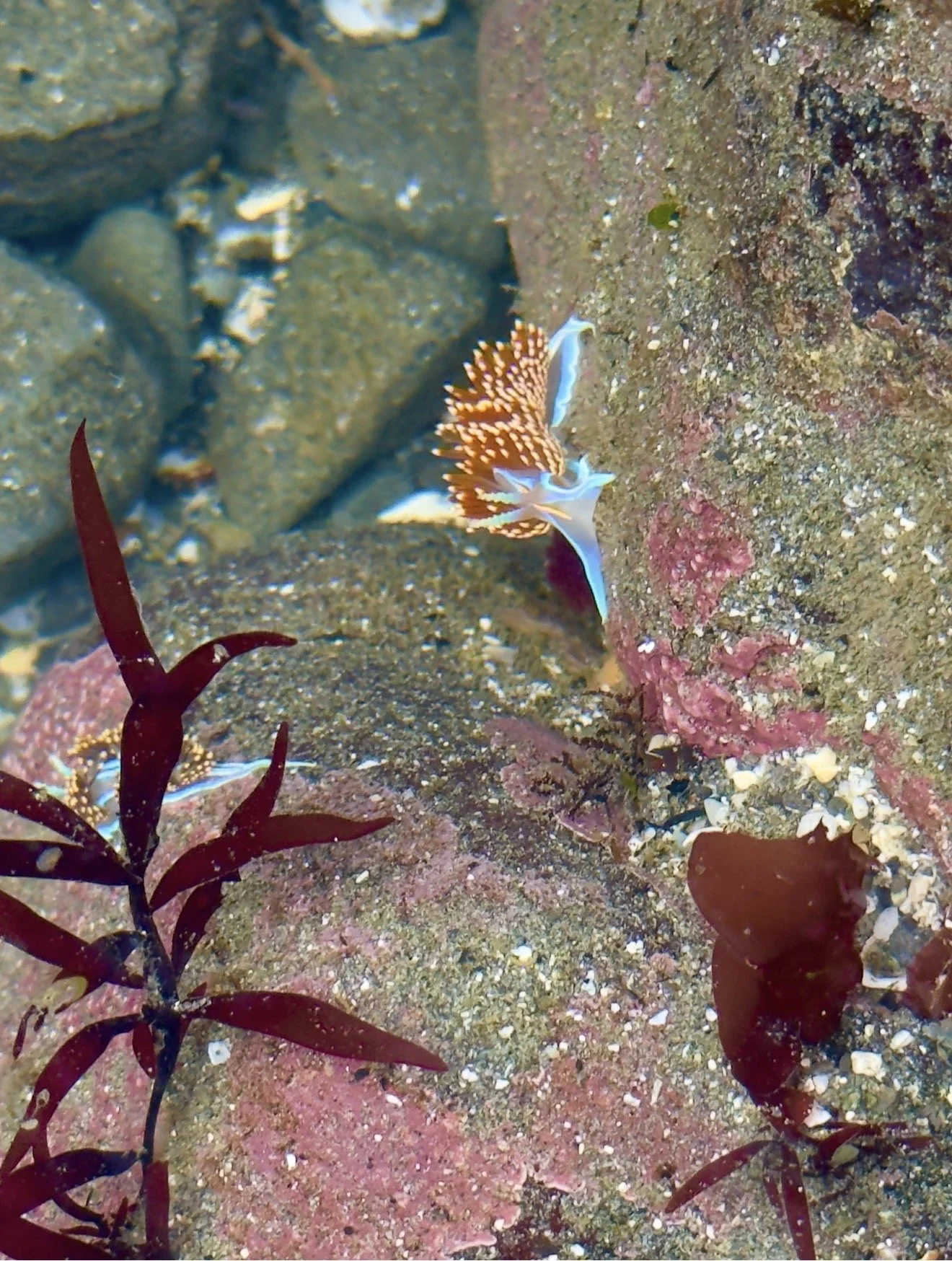
This spring, I have twice taken friends “tidepooling”. If you are not familiar with the term, it means to visit rocky coastal areas at low tide. Tides happen once or twice per day along the coastlines of the world; they are caused by the regular rise and fall of ocean waters in response to the gravitational pull of the Moon and Sun combined with the rotation of the earth. When a low tide causes waters to recede in rocky coastal areas, pools are created by the rocks and sand. Intertidal zones are some of the most diverse ecosystems on earth and are home to an incredible variety of unusual life forms including animals, plants, and algaes.
As a child, my parents would take me to the Monterey area of coastal California where we would often explore tidepools. Though they didn’t know many of the life forms there, they instilled in me the joy of discovery found in tidepooling. When later becoming a ranger, I started out in “interpretation” which is basically environmental education. I used to very much enjoy leading tidepool walks for visitors and, on days off, my husband and I enjoyed exploring them on our own. Later, when raising our sons, we loved taking them to go tidepooling.
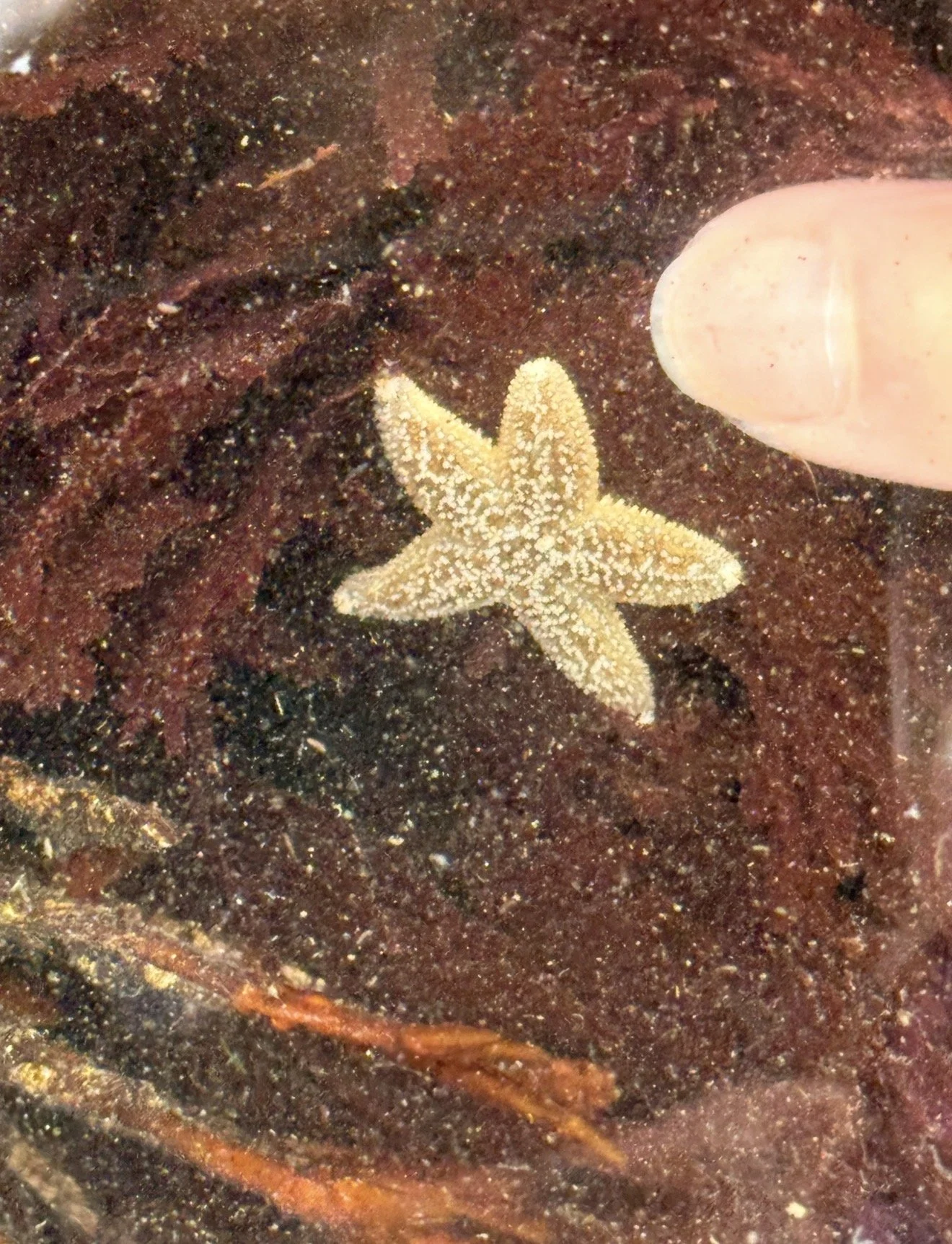
The trips with friends this year were so fun as I got to introduce them to the delight of tidepooling; the joy and wonder of discovery! Seeing the amazement on my friends faces and the childlike happiness at finding something unique and fascinating in tidepools…was a gift to me. It reminded me of times with my kiddos many years ago.
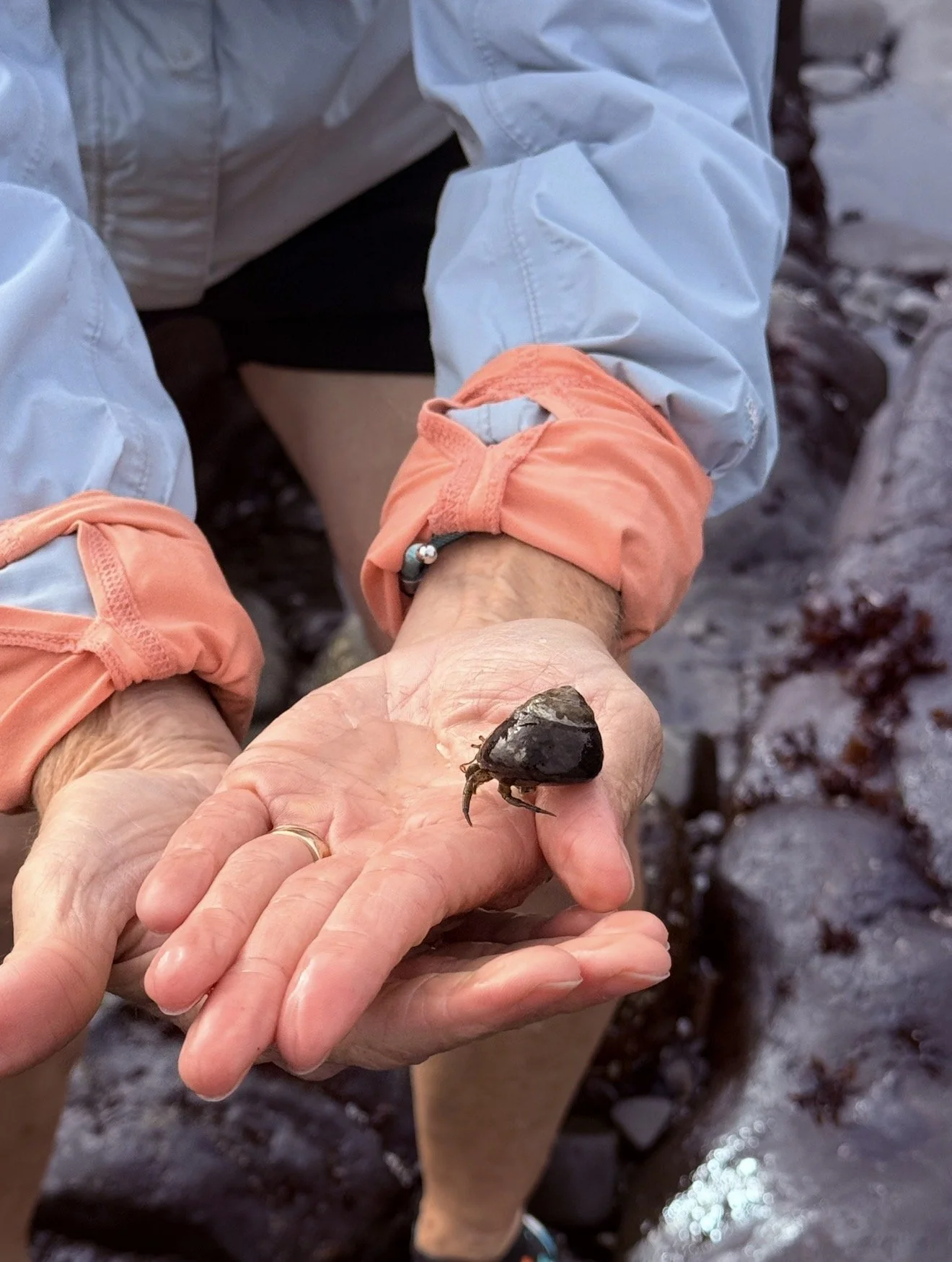
“Oh, come look at what I found!” “Look at the starfish!” “This is so cool! What is it?” Comments and questions just leapt with glee like the very waves of the ocean! Cell phones out for photos. Hands out to carefully hold and examine tidepool treasures, before gently replacing the little life forms back in their tidepool homes.
So, if you are headed to a rocky coastal area and have never had a chance to explore tidepools, find a park and go on a “tidepool walk” with someone who can help you to safely explore and experience the wonder of life where the ocean meets the shore in rocky low tides!