
Stars of the Sea!
When the tide was out I spent hours on the sands, looking at the star-fish and sea-urchins, or watching the children digging for sand-eels, cockles, and the spouting razor-fish.
Mary Sommerville
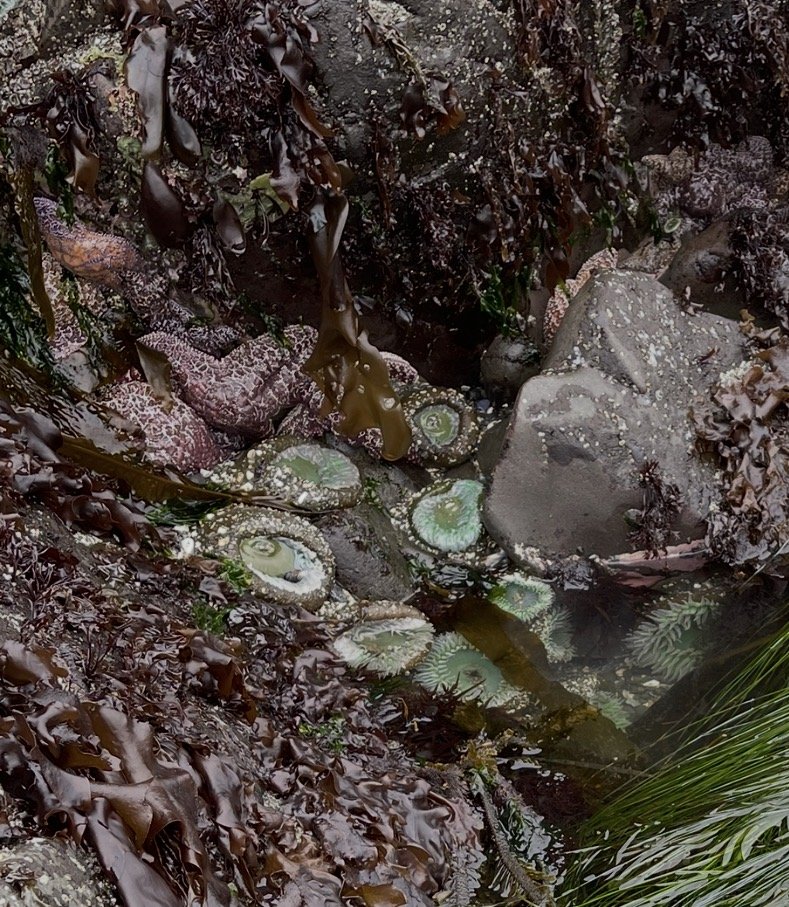
Today, we’ll revisit the rocky coastline areas where the tides alternately inundate the shore then recede, leaving tidepools behind in the rocks. Large numbers of organisms are found here, many with special adaptations and abilities to survive this rugged, wave pounded area.
Because the coast is like a second home to me and I love exploring tidepools, I sometimes forget that what seems very normal to me is a special find to those who I bring tidepooling for the first time. Indeed, I fail to stop and think that the everyday find is actually a pretty extraordinary creature. I’m talking about starfish, one of the few animals that everyone knows by sight, even if they have never seen a real one before!
Starfish are unique animals, though many people don’t realize that they are related to sand dollars, sea cucumbers, and sea urchins (more about those animals in future blogs). Where to start? There are so many cool things about sea stars! We will have to revisit more about starfish on a future blog!
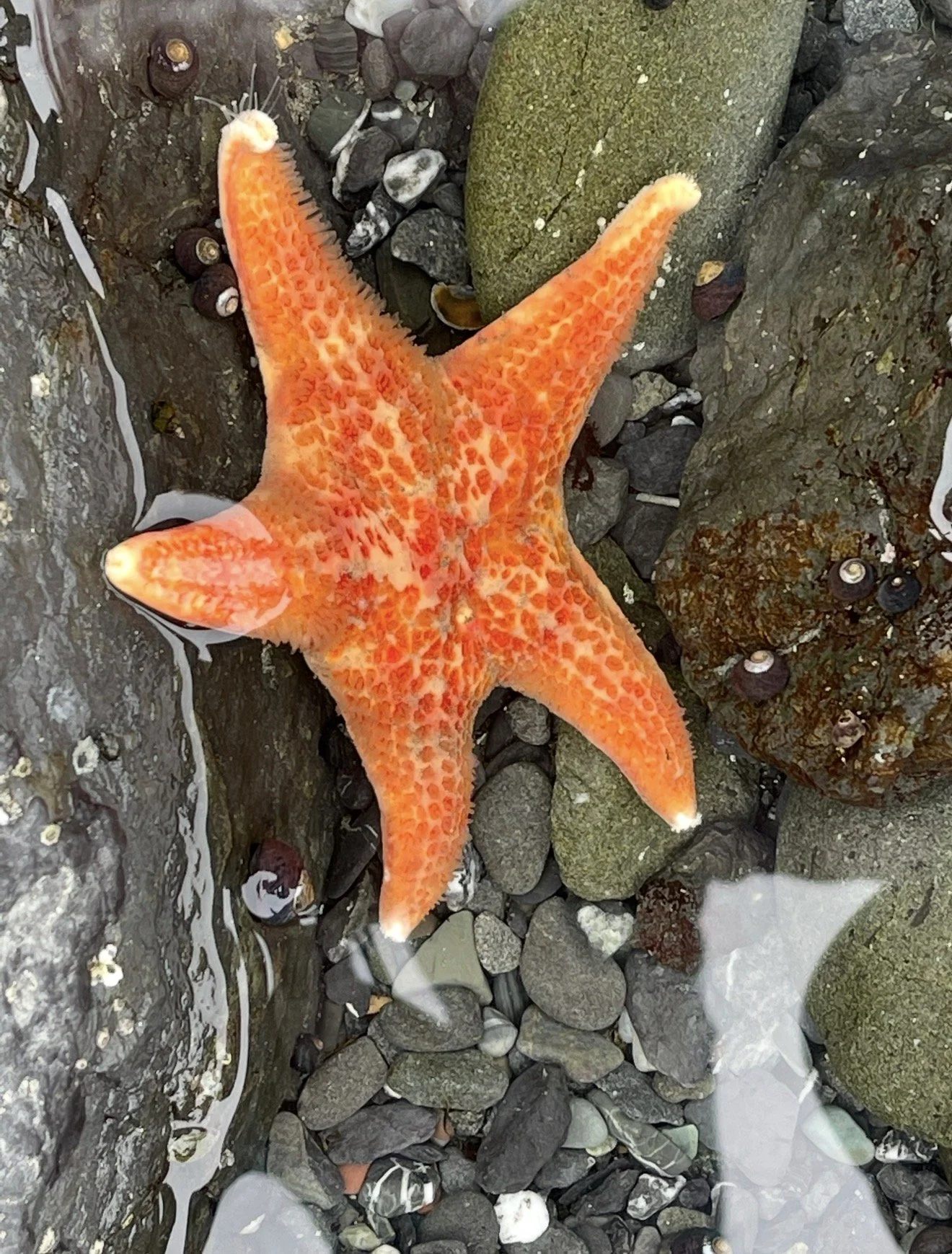
Today, let’s consider the topside of a starfish. Though most people think of a starfish as having five arms like a typical drawing of a star, there are actually over 2000 varieties of starfish and some species have 20 arms and one even has up to 40 arms! The arms may have the very classic look of a star, but can also be extremely skinny and long such as with the brittle star. Another interesting shape is that of the Leather Star which appears to have “webbing” at the base of the center of the starfishes arms. At the end of each arm is a very simple “eye” which really only distinguishes shades of light and darkness and vague shapes. Some starfish can live in the darkness of the deep sea! The little white “pincers” on their topside are to keep algae, barnacles, and other life forms from attaching to the starfish.
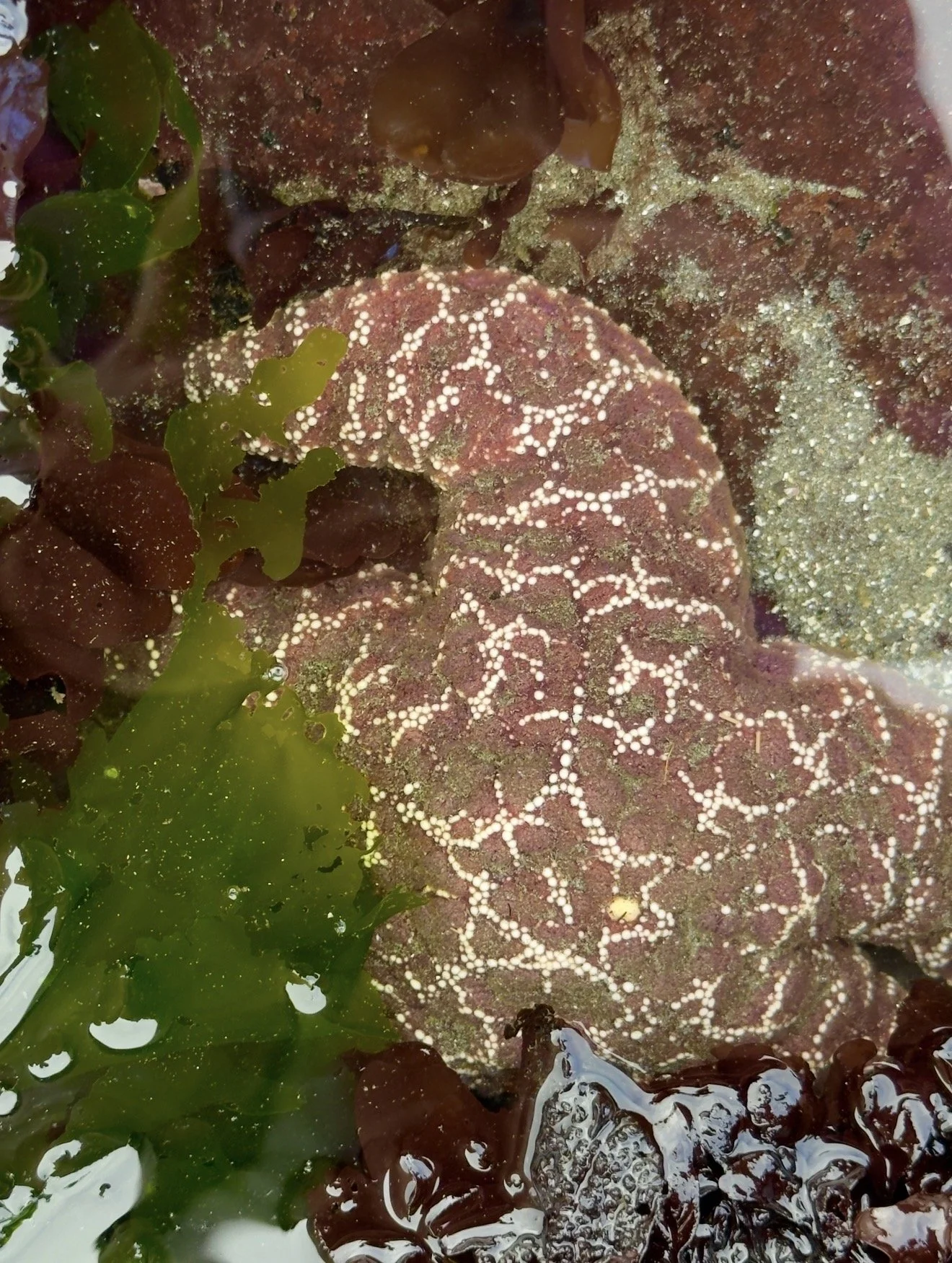
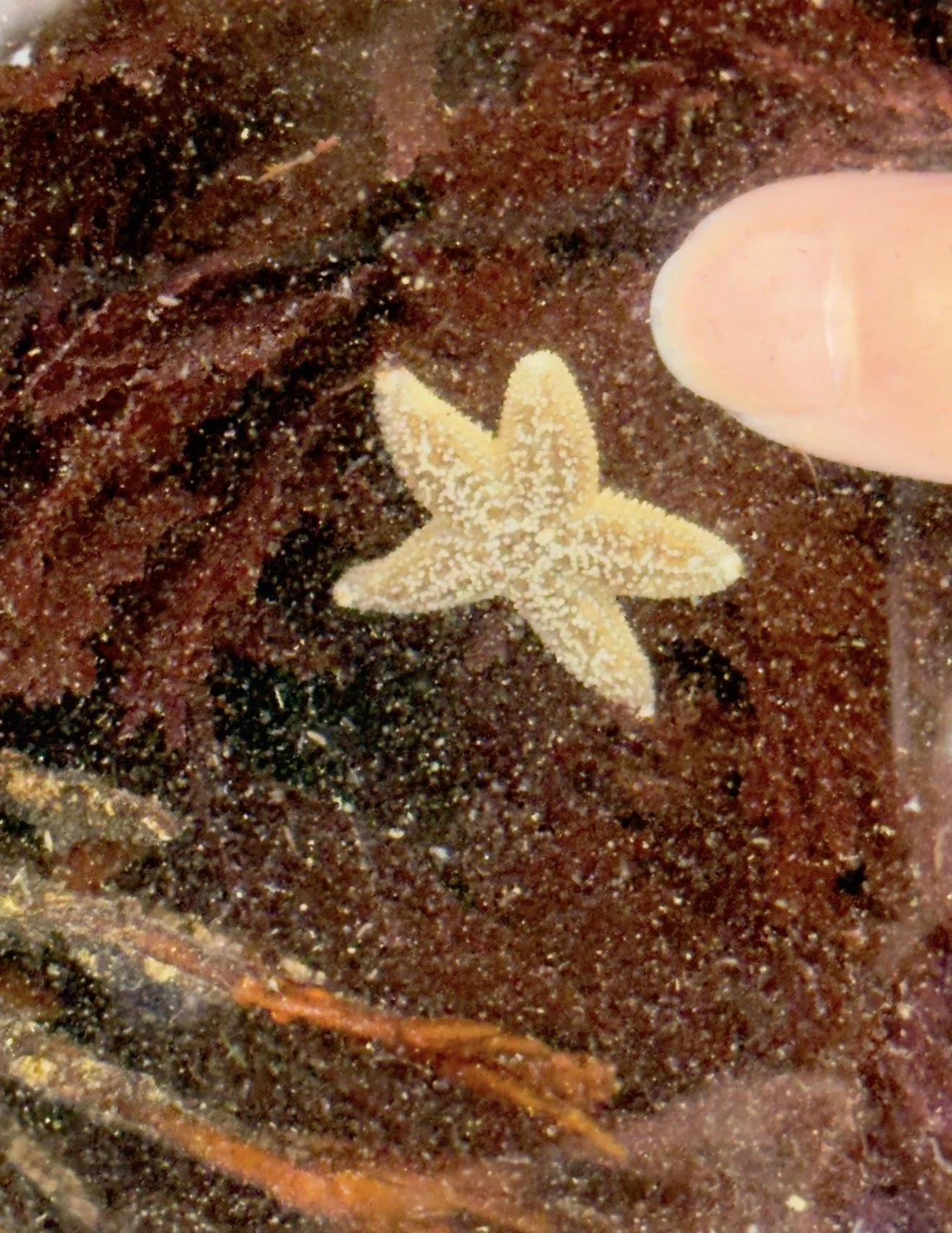
Then there’s the colors! Sun stars, the Pacific starfish species, has 24 arms and are a beautiful bright orange color that makes its name very appropriate! I’ve only found a couple of them in my life and each time, I’ve been totally amazed! The common Ochre Star of the Pacific, with its classic five arm star form, comes in an startling variety of colors from orange to purple to brownish red to pink; the babies are a pale off white so as to camouflage (blend in) more readily in kelp beds.
Obviously, I can go on and on talking about starfish, yet I often move right past them when tidepooling until a “newbie” friend excitedly exclaims that she’s found a starfish! Then I stop and retreat to “oooh” and “aaah” a bit over the find…as well as share a bit of cool starfish info.
Have you ever found yourself in a similar situation where something that seems so familiar to you is a fabulous find for someone with you? And deep down knowing that the “find” really is pretty special even if it’s “common” and you see it all the time. A typical experience for many of us in the Reno area is when you meet someone from a more mild climate who is captivated with wonder at a snowfall!
Hoping that you will be blessed to see some familiar things anew through the eyes of others…and experience the wonder all over again yourself!